
Blog
Diplomaticos No.2 Cuban Torpedo – Refined, Classic, Patient Smoke
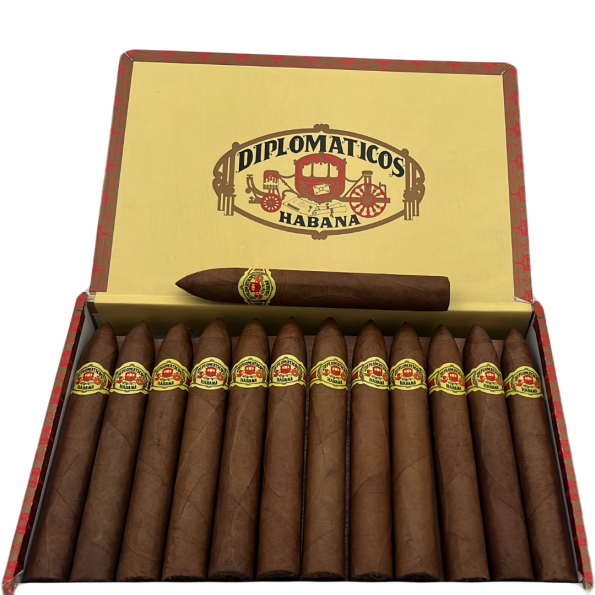
The Diplomaticos No. 2 might be the single most underrated torpedo in the Cuban portfolio. While the world chases Montecristo and Cohiba torpedos at steep prices, this cigar quietly delivers equivalent quality for meaningfully less money. Produced at the same El Laguito factory, sharing the same Vuelta Abajo terroir, and rolling off the tables of equally skilled torcedores, the Diplomaticos No. 2 has spent decades living in the shadow of flashier siblings. That obscurity, frankly, is a gift to anyone paying attention.
Diplomaticos as a marca has never been a marketing powerhouse. Habanos S.A. directs the bulk of its promotional energy toward the portfolio’s star brands — Cohiba, Montecristo, Partagas, Romeo y Julieta. Diplomaticos exists almost as an insider’s secret, a brand that veteran smokers recommend to each other in quiet conversations at LCDH shops and private lounges. The No. 2, a pyramide vitola that shares its exact dimensions with the legendary Montecristo No. 2, is the crown jewel of a deliberately understated line.
Let me be direct about what I believe after smoking dozens of these over several years: if the Diplomaticos No. 2 carried a Montecristo band, it would cost fifty percent more and nobody would question the price. The tobacco tells the same story. The difference is branding, not quality.
The Numbers Behind the Smoke
| Format | Torpedo / Piramide |
| Length | 6.1 inches (156mm) |
| Ring Gauge | 52 |
| Body | Medium to Full |
| Factory | Briones Montoto (El Laguito) |
| Smoke Duration | 65–85 minutes |
Unwrapping the Hidden Gem
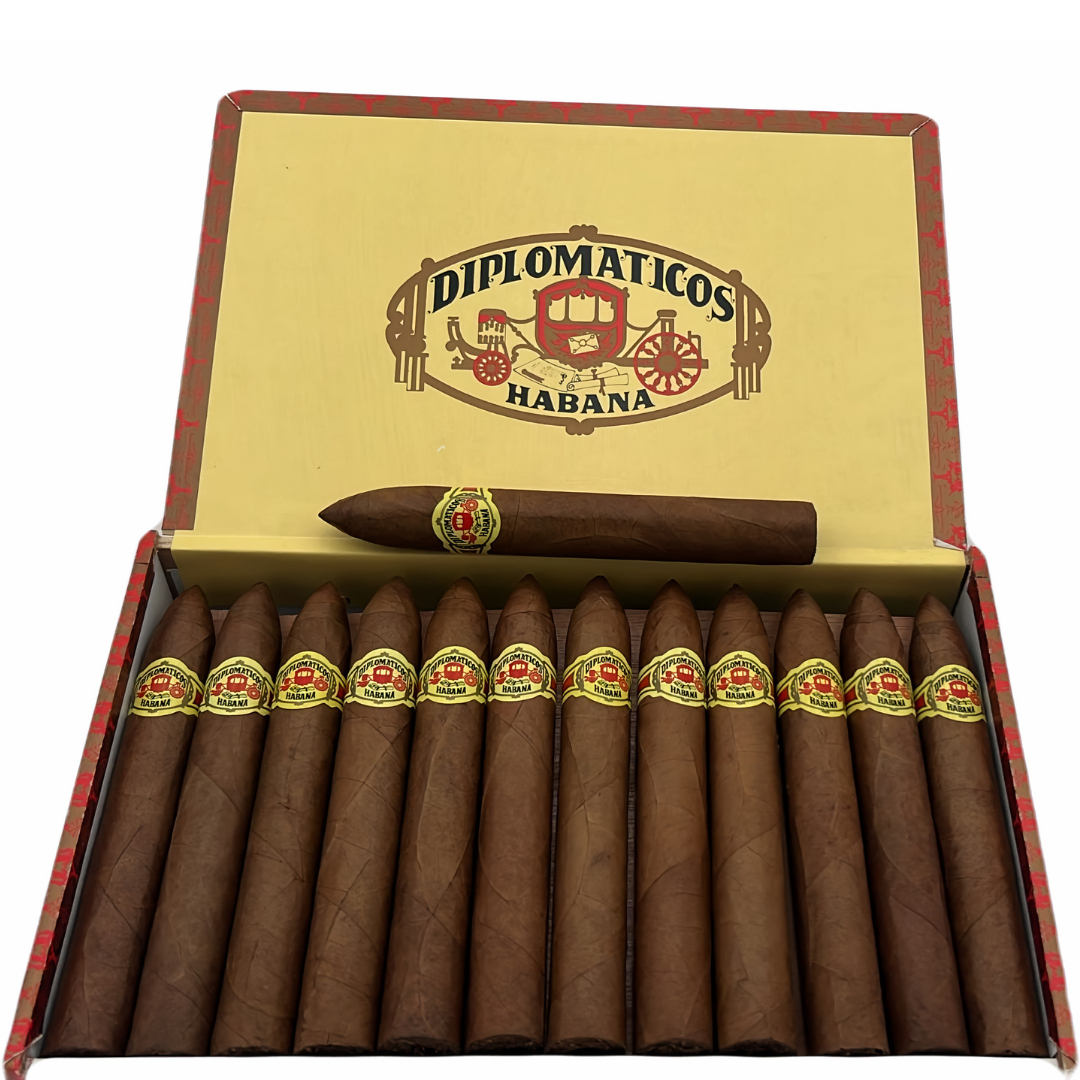
The Diplomaticos band is modest — a blue-and-gold design that lacks the ornate extravagance of a Cohiba triple band or the regal presence of a Bolivar emblem. The cigar itself, however, has nothing modest about it. The wrapper on the three specimens I smoked for this piece showed beautiful Colorado-shade coloring with moderate oil and tight, nearly invisible seams. Whoever rolled these took pride in the work. The torpedo tip was symmetrical and firm without being hard — a sign of skillful bunching and pressing.
Rolling the cigar between my fingers, the fill was consistent from foot to head. No soft spots suggesting underfilling; no hard lumps indicating bunched filler leaves. The cold foot aroma delivered sweet hay, cedar, and a distinctive honeyed quality that immediately set the Diplomaticos apart from the darker, more aggressive pre-light scent of a Montecristo No. 2. There was something almost delicate about it — a word I do not use casually when describing Cuban cigars.
Why the Montecristo Comparison Is Unavoidable
Every conversation about the Diplomaticos No. 2 eventually circles back to the Montecristo No. 2. There are good reasons for this. Both cigars use the piramide vitola with identical measurements. Both draw from the same regional tobacco pool in Vuelta Abajo. And persistent — though officially unconfirmed — industry knowledge suggests that the blend profiles overlap significantly.
But they are not identical cigars. Having smoked them side by side on multiple occasions, the differences are real if subtle. The Montecristo No. 2 typically opens with more assertive spice and carries a weightier body through the first half. The Diplomaticos No. 2 begins softer, sweeter, more approachable — then builds gradually toward a complexity that rivals or occasionally surpasses its famous cousin by the final third.
Think of it this way: the Montecristo No. 2 is the extrovert at the dinner party, commanding the room from the moment it walks in. The Diplomaticos No. 2 is the quiet conversationalist in the corner who, by dessert, has said the most interesting things of the evening. Neither approach is superior. But one costs considerably less, and that economic reality matters when you smoke regularly.
Lighting and First Impressions
Cut the torpedo tip conservatively. With piramides, you control the draw aperture through how much of the taper you remove. A smaller opening concentrates smoke and intensifies flavor — ideal for the opening third where the Diplomaticos starts gently. You can always trim more later if the draw feels too restricted.
The light brings immediate cedar. Not the raw, freshly-cut cedar of a pencil shaving, but warm, aged cedar with a sweetness underneath — almost like cedar-lined closet air mixed with raw honey. Cream appears on the second draw and coats the palate. A gentle nuttiness — roasted cashew — threads through the cedar and cream, creating a first impression that is genuinely inviting.
This opening phase is where the Diplomaticos reveals its greatest strength and greatest marketing challenge simultaneously. It is elegant. It is refined. And in a market that increasingly celebrates bold, powerful, full-throttle cigars, elegance does not always sell. The smoker who gives up after three mild puffs, deciding the cigar lacks character, misses the extraordinary transformation that unfolds over the next hour.
The Middle Act: Patience Rewarded
By the midpoint, the Diplomaticos No. 2 has quietly evolved into something considerably more complex than its opening suggested. The cedar foundation remains, but it has been joined by cocoa — not the sharp bitterness of dark chocolate, but the rounded, slightly sweet cocoa of a well-made hot chocolate. Floral hints appear and disappear, elusive and brief, never staying long enough to be precisely identified but adding a dimension of sophistication to the profile.
The body has thickened from medium to medium-full. There is real weight to the smoke now, a substance that registers on the palate as oily and coating. The retrohale has gained a white pepper warmth that was barely detectable in the first third. Sweetness persists — that honey thread from the opening has deepened into something resembling wildflower honey with a slightly bitter edge.
Construction on every example I have smoked was above average. The piramide shape can be difficult to roll — the tapered head requires precise bunch work — and construction failures in torpedos from various factories are not uncommon. The Diplomaticos No. 2 consistently delivered even burns, solid grey ash that held for over an inch, and a draw that improved as the ring gauge widened toward the foot.
The Final Revelation
The closing third is where the Diplomaticos No. 2 stakes its claim to serious consideration. Everything escalates. The cocoa darkens toward genuine dark chocolate. A leather note appears for the first time — supple, well-conditioned, adding a masculine counterpoint to the lingering sweetness. Coffee joins the conversation, not the aggressive espresso of a Bolivar but a smooth, medium-roast pour-over quality that integrates seamlessly with the cedar and chocolate.
The torpedo shape means the ring gauge is at its widest in the final section, which produces maximum smoke volume with the coolest temperature. This is the opposite of many parejo formats, where the final third often overheats. The Diplomaticos finishes cool, rich, and layered — a controlled crescendo rather than a burning finale.
At no point during the entire smoke did I feel overwhelmed by nicotine. The strength settled firmly in medium-full territory by the end, which makes this cigar accessible to a wider audience than most Cuban torpedos. A Montecristo No. 4 smoker ready to step up in format and complexity would find the Diplomaticos No. 2 a natural and comfortable progression.
Aging: Where the Diplomaticos Gets Dangerous
Fresh Diplomaticos No. 2 is excellent. Aged Diplomaticos No. 2 is remarkable. At two to three years of humidor rest, the blend undergoes a transformation that would be dramatic in any cigar and is particularly striking here because the base profile is already refined.
With age, the cedar develops a resinous sweetness. The cocoa transforms into genuine dark chocolate richness. A dried fruit quality emerges — apricot, golden raisin — that adds a new flavor dimension entirely absent from fresh examples. The overall effect is a cigar that feels more expensive than it is, more rare than its production numbers suggest, and more rewarding than its modest reputation would lead you to expect.
If you are inclined toward long-term aging experiments, buy a box of 25 Diplomaticos No. 2 and forget about them for five years. The future version of yourself will be grateful for the foresight.
Ideal Pairings for a Refined Smoke
The Diplomaticos No. 2 pairs beautifully with beverages that complement rather than compete. A well-aged cognac — Remy Martin XO or Hine Antique — creates an extraordinary combination of grape sweetness, oak, and the cigar’s cedar-cocoa profile. The viscosity of aged cognac mirrors the cigar’s creamy smoke texture, and the two seem to amplify each other’s best qualities.
Port wine — specifically a 20-year tawny — matches the Diplomaticos’ dried fruit character with uncanny precision. The caramel and walnut notes of aged tawny port interweave with the cigar’s honey sweetness in a pairing that feels intentionally designed rather than accidentally complementary.
For a morning or afternoon smoke, a cortado or flat white provides enough coffee weight to stand beside the cigar without dominating. The milk softens the coffee’s acidity, paralleling the Diplomaticos’ own smooth, rounded delivery.
Who This Cigar Is Really For
The Diplomaticos No. 2 belongs to the discerning smoker who values substance over branding. It rewards patience. It benefits enormously from rest and aging. And it delivers a quality-to-price ratio that no other Cuban torpedo currently matches.
Collectors hunting for Montecristo Petit No. 2 at inflated prices would do well to redirect some of that budget here. Not as a replacement — both cigars deserve a place in any serious humidor — but as a recognition that great Cuban tobacco does not always wear the most famous band.
The Diplomaticos No. 2 is Cuba’s best-kept open secret. It has been hiding in plain sight for decades, patiently waiting for smokers who care more about what is inside the wrapper than what is printed on the label.
Discover Cuba’s Most Underrated Torpedo
Worth Investigating Next
- Montecristo No. 2 Review – The Torpedo That Started It All
- Montecristo No. 4 Review – Cuba’s Everyday Classic
- Montecristo Petit No. 2 – The Compact Alternative
Finally someone gives the Diplomaticos the attention it deserves\! I’ve been saying this for YEARS at every herf I attend — this is the most underrated Cuban cigar in the entire Habanos catalog. In Italy, a few of us have been smoking Diplomaticos No. 2 for over a decade and every time we introduce someone new to it, same reaction: “why haven’t I tried this before?” The answer is simple — Montecristo hogs all the marketing. Same torpedo shape, similar price range, but the Diplomaticos has this gorgeous cocoa and dried fruit character that I find pairs better with food. I like to smoke one after a proper Italian dinner — some aged Parmigiano, a drizzle of aged balsamic, maybe some dark chocolate. The sweetness in the cigar connects with those flavors beautifully.
The Diplomaticos vs Montecristo connection is real and it’s more than just a theory. The H. Upmann factory (José Martí factory) in Havana produces both brands. Same building, same torcedores, same tobacco warehouse. Where they differ is in the blend — different proportions of seco, ligero, and volado leaves. But the DNA is undeniably shared. I’ve visited the factory twice and seen the production lines side by side. What makes Diplomaticos special is that it was originally created for the diplomatic gift market — meant to impress foreign dignitaries visiting Cuba. That heritage means quality was baked into the marca from day one. The fact that it flies under the radar now is a GIFT to knowledgeable smokers. You’re getting factory-floor quality without the Montecristo price premium. Best Cuban torpedo cigar for the money, hands down.
But the blend IS different, Antonio, and that’s what matters at the end of the day. I’ve smoked the Montecristo No. 2 and Diplomaticos No. 2 back to back on three separate occasions specifically to compare them. My notes consistently show: the Diplomaticos has more cocoa and less mineral character. The Montecristo is sharper, more defined edges to the flavor profile. The Diplomaticos is rounder, smoother, more approachable. Strength-wise they’re nearly identical — both medium-full. Where I see the biggest gap is in Diplomaticos No 2 aging potential. I’ve got some with 5 years on them and they’ve developed this incredible creamy quality that I haven’t seen in similarly aged Monte 2s. The tobacco just seems to meld together differently over time. Both excellent cigars, but different enough that calling them “the same” would be inaccurate.
Great discussion here. Quick question from a relative newcomer — if I love the Montecristo No. 2 (it’s basically my desert island cigar), should I try the Diplomaticos? Is it really a cheap Cuban torpedo alternative or is that oversimplifying it? I’ve seen the Diplomaticos priced at maybe 30-40% less per stick at most shops. That’s a significant saving if the quality is even close. Also, is it easy to find or is it one of those marcas that’s always out of stock? I’ve had trouble sourcing some of the less popular Cuban brands before.
David, absolutely yes. If the Monte 2 is your thing, the Diplomaticos No. 2 will feel like finding a secret menu item at your favorite restaurant. You’ll save about 30-40% per stick and the quality is exceptional — this is NOT a budget compromise, it’s an underrated Cuban cigar that happens to cost less because it doesn’t have the marketing machine behind it. The flavor profile shares that same torpedo experience — the tapered head gives you a concentrated start that opens up beautifully — but with its own personality. More chocolate, more sweetness, a touch of dried stone fruit that the Monte doesn’t have. Availability can be tricky since Habanos doesn’t produce as many, but when you find them, buy in quantity. I keep at least two boxes in my humidor at all times now. One to smoke, one to age. Trust me on this — once you try it, you’ll wonder why you were paying Monte prices all along.