
Cigar Reviews
Quai D’orsay No. 54 – Cuban Elegance in Every Draw
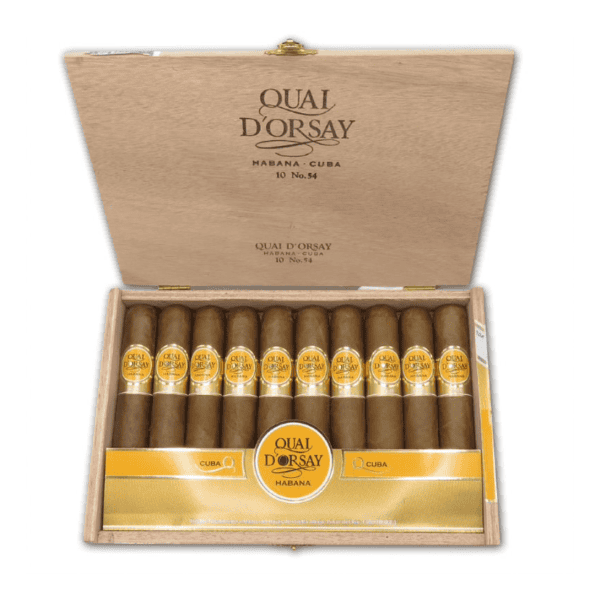
If Cuban cigars were a symphony orchestra, the Quai D’Orsay No. 54 would be the first violin — not the loudest instrument, but the one that defines the melody. While other marcas compete for attention with brute strength or aggressive spice, this Pirámide Extra from Cuba’s most understated brand occupies a space that few Habanos products even attempt: genuine elegance. Not the kind you perform. The kind you simply possess.
The Quai D’Orsay No. 54 measures six inches with a 54 ring gauge, tapering to a pointed head that concentrates the smoke in a way flat-capped cigars cannot replicate. It is, by every measurable standard, a medium-bodied cigar. But reducing it to a number on a strength scale would be like describing a Burgundy solely by its alcohol content. What the No. 54 offers has less to do with power and everything to do with refinement — a word the cigar industry uses carelessly but that this particular blend has earned.
Quai D’Orsay — named after the Parisian boulevard where the French Ministry of Foreign Affairs sits — was originally created in 1973 for the French market, a diplomatic cigar in both name and temperament. That heritage shapes everything about how this marca smokes. Where a Bolívar overwhelms, the No. 54 persuades. Where a Partagás confronts, the No. 54 suggests. And where so many Cubans demand attention, the Quai D’Orsay asks only that you pay attention.
Tasting Through the Thirds — How the No. 54 Unfolds
Before the Light
The wrapper is a golden Colorado Claro — lighter than most Cuban cigars, almost silky in texture, with minimal veining and a subtle sheen that speaks to careful leaf selection. The construction is visually flawless: seams tight, cap cleanly applied, torpedo point sculpted with precision. Running a thumb along the barrel reveals no soft spots or inconsistencies. This cigar was rolled with intention.
The pre-light draw delivers the first signal of what’s to come. Through the tapered head, you get a gentle pull of sweet hay, fresh cream, and a floral note that sits somewhere between dried jasmine and chamomile. There is nothing aggressive, nothing sharp, nothing that warns you to brace yourself. Instead, the cold draw whispers a promise: this will be smooth, layered, and worth every minute of your attention.
The foot, unlit, smells of honey-cured tobacco and a touch of baking spice — a trace of cinnamon, perhaps, or nutmeg grated from a distance. It is, without exaggeration, one of the most inviting pre-light profiles in the current Habanos lineup.
Opening — The First Conversation
Toasting a torpedo requires care. The pointed foot means uneven surface area, and the goal is a complete, even light that allows the blend to express itself from the first draw. I used a soft flame, rotating slowly, and pulled gently until a thin ring of ash formed around the entire circumference.
The initial draws revealed cream. Not a metaphor for smoothness — actual cream, a dairy-like richness that coated the palate with an almost liquid texture. Beneath it, a delicate sweetness: honey dissolved in warm milk, with a whisper of white pepper that appeared on the retrohale so gently it felt like a breeze rather than a gust. The smoke was light but not thin, carrying its flavors with the confidence of a cigar that knows it doesn’t need to shout.
Within the first inch, a floral character emerged that set the No. 54 apart from anything else I’ve smoked recently. It wasn’t perfumy or artificial — it was the scent of wildflowers growing alongside a country road, natural and unforced. Rose petal, perhaps. Or orange blossom. Whatever the specific flower, it added a dimension of beauty that most cigars don’t even aspire to.
The burn established itself perfectly. The torpedo shape produced a concentrated stream of smoke that delivered each flavor with precision, directing the blend’s nuances to the center of the palate rather than dispersing them across a wider area. This is one of the inherent advantages of the Pirámide format, and the No. 54 exploits it masterfully.
The Middle — Depth Without Force
As the cigar widened past the taper and into its full 54 ring gauge, the character shifted. The cream remained as a constant backdrop, but the flavors layered atop it grew more defined. A toasted almond note materialized — warm, nutty, with a slight sweetness that reminded me of marzipan. Cedar appeared on the finish of each draw, clean and aromatic, the kind of wood note that adds structure without bitterness.
The floral quality persisted but evolved, moving from the fresh petals of the first third to something drier, more herbal — dried lavender, perhaps, or the ghost of chamomile tea left in a porcelain cup. A citrus undertone appeared briefly, bright and unexpected, like lemon zest grated over a dessert plate. It was gone within a few draws, but its presence confirmed the blend’s complexity.
White pepper held steady throughout the middle section, never escalating beyond a gentle warmth at the back of the throat. The body stayed resolutely medium — neither pushing toward full nor retreating into mild territory. This is one of the No. 54’s defining characteristics: it occupies the center of the spectrum and refuses to leave, holding its position with the kind of poise that only a well-balanced blend can achieve.
The smoke output increased as the ring gauge opened up, filling the air with an aroma that non-smokers in the vicinity would likely find more pleasant than most cigar smoke. There’s a lightness to the Quai D’Orsay’s exhaled smoke — a sweetness in the air — that sets it apart from the heavier, more pungent clouds produced by Bolívar or Partagás.
Final Act — Grace Under Pressure
Where many cigars grow harsh or muddled in their final third, the No. 54 maintained its composure. The cream softened slightly, replaced by a toasted bread quality — a warm, yeasty note that grounded the blend’s lighter elements. The almond deepened into something closer to roasted cashew. A gentle earthiness appeared for the first time, not the heavy soil of a full-bodied Cuban but a light, mineral quality like chalk or limestone.
The finale brought a touch more spice — still white pepper, still restrained, but with added warmth that suggested the blend was concentrating as the cigar shortened. Cedar remained to the last inch. A final floral note, fainter now, closed the experience like a curtain falling gently at the end of a performance you wish had lasted longer.
Total smoking time: approximately seventy-five minutes. Not a single draw disappointed.
Specifications
| Brand | Quai D’Orsay |
| Vitola | Pirámide Extra |
| Length | 6.0 inches (152mm) |
| Ring Gauge | 54 |
| Strength | Medium |
| Smoke Duration | 65 – 80 minutes |
| Heritage | Created for the French market, 1973 |
The French Connection — Why This Brand Exists
Understanding the No. 54 requires understanding its brand’s origins. Quai D’Orsay was conceived during a period when France was the largest market for Cuban cigars outside of Spain. The French palate, shaped by a culture that prizes subtlety in food, wine, and art, demanded something different from the robust, earthy blends that defined most Cuban production. Quai D’Orsay was the answer — a marca designed from the ground up to prioritize finesse over force.
For decades, the brand existed in relative obscurity, available primarily in France and known only to a small circle of international enthusiasts. When Habanos revamped the line and introduced the No. 54 as part of a renewed portfolio, the cigar world took notice. Here was a Cuban cigar that could sit alongside a glass of Champagne without overwhelming it — that could be offered to someone who had never smoked a cigar before and leave them genuinely impressed rather than overwhelmed.
This positioning makes the No. 54 unique in the current Habanos catalog. It is not trying to be the strongest, the most complex, or the most aged. It is trying to be the most beautiful. And in that pursuit, it succeeds.
Perfect Pairings — What Matches This Level of Refinement
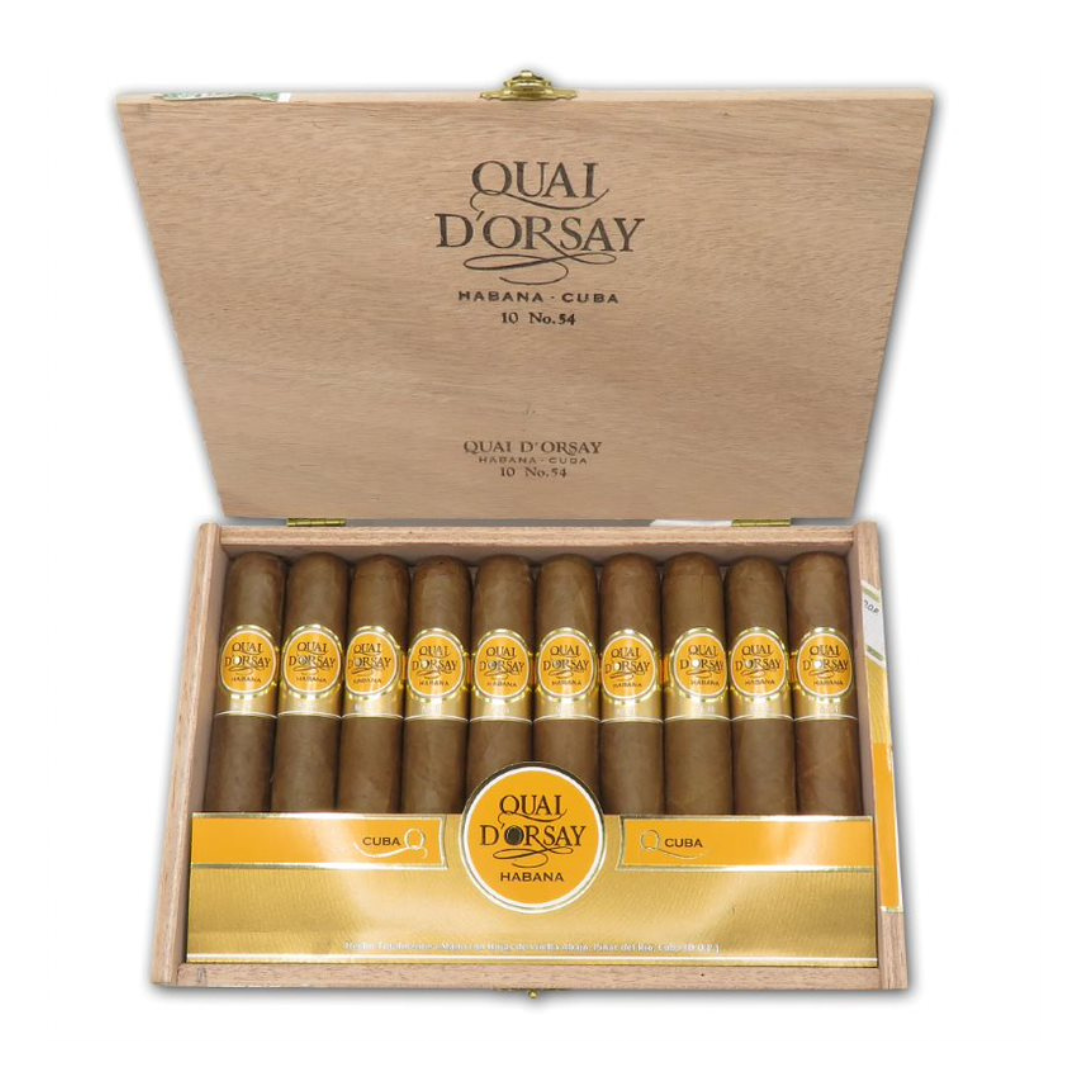
Champagne. Start there. A dry Brut or a Blanc de Blancs pairs with the No. 54 in a way that feels like the two were designed for each other. The wine’s acidity cuts through the cigar’s cream, the bubbles refresh the palate between draws, and the citrus notes in both converge in a moment of unexpected harmony.
Beyond sparkling wine, consider a well-chilled Sauternes or a late-harvest Riesling. The sweetness of these wines mirrors the honey notes in the cigar without creating excess. For spirits, a refined cognac — something elegant rather than powerful, an XO from a smaller house — provides warmth without competing.
Tea lovers should reach for a first-flush Darjeeling or a high-quality white tea. The delicacy of these teas matches the cigar’s temperament perfectly, creating a pairing that feels more like a meditation than a indulgence.
What to avoid: anything barrel-aged and aggressive. A cask-strength bourbon, a heavily peated Scotch, a dark overproof rum — these will bulldoze the No. 54’s subtlety and leave you tasting only the spirit. Match elegance with elegance, and this cigar will reward you.
The Thinking Smoker’s Choice
There is a certain type of cigar smoker for whom the No. 54 will feel like a revelation. This is the person who has noticed that many “full-bodied” cigars blur together after the first third — that once the pepper hits and the earth piles on, individual character often gets buried under sheer intensity. The No. 54 is proof that strength and interest are not the same thing. A medium-bodied cigar can be every bit as complex, every bit as layered, every bit as memorable as its full-bodied counterparts — provided the blend is constructed with sufficient care.
For new cigar smokers, the Quai D’Orsay No. 54 is one of the finest possible introductions to the Cuban world. It is smooth enough not to intimidate, complex enough not to bore, and beautiful enough to create an immediate understanding of why people dedicate years of their lives to exploring this particular pleasure. Offer one to a curious friend, and you may well create a lifelong enthusiast.
For experienced smokers who have spent years in the company of heavy Cubans — the Bolívars, the Partagás Series D, the aged Cohibas — the No. 54 offers something equally valuable: perspective. It reminds you that there is more than one way to make a great cigar, and that the quietest voice in the room sometimes has the most interesting things to say.
The H. Upmann No. 2 shares some of this sensibility — a classic torpedo with medium body and refined character. Those who enjoy the Cohiba Siglo VI for its creaminess will find the No. 54 explores similar textures from a different direction. And fans of the Diplomaticos No. 2 will appreciate how the Quai D’Orsay achieves comparable smoothness with its own distinctive floral signature.
Elegance, delivered
A Final Thought
Not every memorable experience needs to be intense. Not every great cigar needs to be strong. The Quai D’Orsay No. 54 understands this distinction instinctively, and it offers something that the current cigar market — with its relentless push toward bigger ring gauges, darker wrappers, and fuller bodies — desperately needs: proof that restraint and mastery are not opposing forces.
This is a cigar that asks you to slow down, tune your palate to a finer frequency, and discover what happens when Cuban tobacco is crafted not for impact but for beauty. What happens, it turns out, is something rather extraordinary.
You Might Also Enjoy
- H. Upmann No. 2 — A classic Cuban torpedo with similar refinement
- Cohiba Siglo VI Review — Creamy, complex, and worth the comparison
- Diplomaticos No. 2 — Another smooth Cuban that favors finesse over power
So here’s the thing about the “light Cuban” reputation that follows Quai D’Orsay around — it’s not wrong exactly, but it’s misleading. Yes, compared to a Partagas Serie D or a Bolivar Belicosos, this is absolutely on the milder end. But calling it “light” makes people think it has no flavor, and that’s just not true.
I’d describe the No. 54 as elegant rather than light. The Quai D’Orsay No 54 review here gets it right — there’s a lot happening in this cigar, it’s just not punching you in the face with it. Creamy cedar, toasted almonds, a floral sweetness that’s unique in the Cuban lineup. It’s closer to what you’d get from a premium Dominican except with that unmistakable Cuban terroir backbone underneath.
When the Quai D’Orsay vs Cohiba debate comes up, I tell people they’re not competing for the same smoker. The Cohiba Siglo series is refined but still has punch. The Quai D’Orsay is pure finesse. Different tools for different occasions.
The French connection with this brand is genuinely interesting and I don’t think it gets discussed enough. Quai D’Orsay was literally created for the French market — SEITA (the French tobacco monopoly at the time) wanted a Cuban blend that suited French tastes, which historically leaned toward lighter, more aromatic tobacco. That’s why this is the lightest Cuban cigar brand in the Habanos portfolio. It’s not an accident, it’s by design.
I’ve been collecting Cuban cigars for years and the Quai D’Orsay line is what I bring out when I have guests who normally smoke Davidoff or Ashton. It’s the perfect bridge cigar. Sophisticated enough for serious smokers, approachable enough for people who find most Cubans too strong.
And here’s a pairing tip that changed everything for me — champagne. Specifically a dry brut or blanc de blancs. The Cuban cigar champagne pairing sounds pretentious, I know, but the effervescence and mineral notes of good champagne with the delicate sweetness of the No. 54 is genuinely one of the best pairings I’ve experienced. Far better than rum with this particular cigar.
Can I get a recommendation here? I’ve been smoking Dominican cigars for about 8 years — mainly Arturo Fuente Don Carlos, Davidoff Grand Cru, and some Padron Anniversary series. I want to try my first proper Cuban but every time I look at the options, people recommend stuff like the Partagas D4 or Montecristo No. 2 and honestly those sound too strong for what I enjoy.
Is this the best Cuban cigar for Dominican smokers making the switch? The flavor notes in this review — cedar, cream, almonds — sound very much in my wheelhouse. The Davidoff Grand Cru is my go-to and from what I’m reading, the Quai D’Orsay occupies a similar space but with Cuban tobacco.
Also wondering about the Quai D’Orsay vs Cohiba question. Would a Cohiba Siglo I or II be a better entry point, or should I start here? Price isn’t a concern, just want to actually enjoy my first Cuban experience instead of being overwhelmed by a full-bodied monster.
@Richard — Start here, 100%. The No. 54 is exactly the best Cuban cigar for Dominican smokers transitioning to Habanos. If you enjoy the Davidoff Grand Cru, the Quai D’Orsay is going to feel like a natural progression rather than a jarring switch. You’ll get that Cuban complexity — the slight tang, the terroir depth — without the nicotine hit that puts off people used to milder mild Cuban cigars.The Cohiba Siglo I is also a solid entry point but honestly it’s quite short and doesn’t give you enough time to really appreciate the flavor development. The No. 54 is a better size for someone used to smoking a Don Carlos, which typically takes about an hour. Similar time commitment, familiar comfort level, but a new world of flavor.Elena’s champagne suggestion is spot on by the way. I tried the Cuban cigar champagne pairing at a tasting event in Dubai last year — Quai D’Orsay No. 54 with a Ruinart Blanc de Blancs — and it was extraordinary. The lightest Cuban cigar brand paired with champagne is one of the most refined experiences in the cigar world. Even non-cigar smokers at the table were impressed.