Partagás Salomón: When Cuba Shows Off (And You Need to Pay Attention)
Picture this: it’s one of those rare Saturday afternoons where you’ve got nowhere to be, the sun’s hitting your deck just right, and you’ve finally cracked open that bottle of 18-year Macallan that’s been collecting dust. The wife’s out with her sister, the neighbors aren’t blasting their music, and you’ve got maybe three hours of pure, uninterrupted freedom ahead of you. That’s when you reach for a Partagás Salomón.
This isn’t your everyday smoke. Hell, it’s not even your every-weekend smoke if we’re being honest about what these beauties demand of you. But when the moment calls for something special – and I mean really special – this figurado delivers in ways that’ll make you understand why Cuban tobacco has been legendary for centuries.
First Impressions: Size Matters (Sometimes)
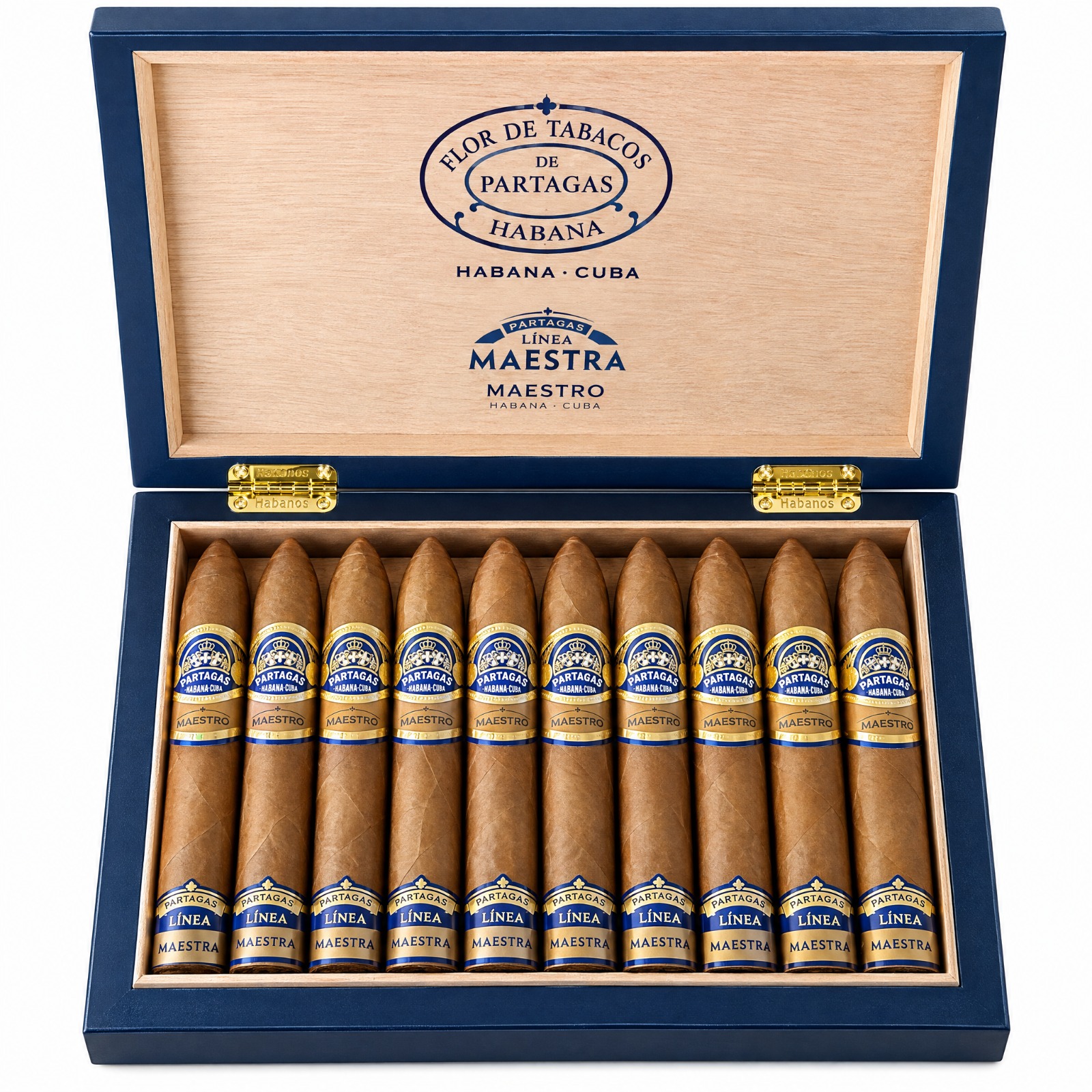
Let’s get the obvious stuff out of the way first. At 7⅜ inches with a 57 ring gauge, the Salomón is an imposing stick. It’s got that classic torpedo shape that tapers to a beautiful point, and when you pull one out of the box, people notice. I remember smoking one at my buddy Mike’s 50th birthday party back in ’19, and it literally stopped conversation. Three guys came over asking what I was smoking before I’d even lit the damn thing.
The construction on these is typically superb – and I say typically because I’ve had maybe two duds out of the dozens I’ve smoked over the years. The wrapper’s usually flawless, with that oily, chocolate-brown Colorado maduro look that screams quality. The foot shows a nice mix of light and dark tobaccos, nothing too uniform (which is actually what you want to see).
Now here’s where I might ruffle some feathers: I think the Salomón is overhyped for what it delivers compared to other Partagás offerings. Don’t get me wrong – it’s a fantastic cigar – but stick for stick? You might get 85% of the experience from a Serie P No. 2. But that other 15%… man, when you want it, you really want it.
The Smoke: A Journey Worth Taking Your Time With
Lighting a torpedo properly takes patience, and if you’re the type who rushes through your cigars, this isn’t for you. I always clip just the very tip – maybe ⅛ inch – and take my time toasting the foot. The first few puffs are all about that pointed cap, giving you concentrated flavors that’ll evolve as the burn line opens up.
Right out of the gate, you’re hit with classic Partagás earthiness. It’s not subtle – this brand never is. There’s soil, leather, and what I can only describe as “old wood” (think about the smell inside a century-old barn). Some people get coffee notes early on, but honestly? I think that’s wishful thinking most of the time. What I do get is a kind of mineral quality, like wet stones, that runs through the entire smoke.
About an inch in, things start getting interesting. The ring gauge opens up, and suddenly you’re dealing with more complex flavors. This is where the Salomón really starts earning its reputation. Dark chocolate emerges – not milk chocolate, but the bitter 70% cocoa stuff. There’s also this spice that builds gradually… it’s not pepper exactly, more like cinnamon mixed with nutmeg.
The middle portion (and we’re talking a good hour and a half of smoking here) is where this cigar shines. The earthiness mellows just enough to let other flavors come through. I consistently get notes of dried fruit – figs, maybe dates – and there’s always this underlying sweetness that keeps everything balanced. The retrohale during this section is gorgeous if you can handle it. Tons of spice through the nose, but it’s complex spice, not just heat for the sake of heat.
Here’s something I’ve noticed that I don’t see mentioned much: these cigars smoke differently depending on humidity and time of year. I had one last summer during a particularly humid spell in Virginia, and it was almost creamy in texture. Fast forward to February, low humidity, same box of cigars – completely different experience. More concentrated, almost chewy smoke. Same great flavors, but the delivery was totally different.
The final third is where you either love this cigar or you don’t. The strength ramps up considerably – we’re talking full-bodied, no question about it. If you haven’t eaten recently or you’re not used to strong cigars, this section will let you know about it. But if you can handle the nicotine hit, the flavors become incredibly intense. More leather, more earth, and this almost metallic quality that sounds off-putting but somehow works.
What I Pair It With (And What You Shouldn’t)
After twenty-three years of smoking cigars, I’ve learned that pairing is personal, but some combinations just work better than others. With the Salomón, I’ve had the most success with aged rum or good whisky. That Macallan I mentioned earlier? Perfect match. The sweetness in the scotch plays beautifully against the earthy, spicy cigar.
I’ve also had great experiences pairing these with Zacapa 23. The rum’s complexity matches what’s happening with the tobacco, and both evolve throughout the evening. Coffee works too, but only if it’s really good coffee. Don’t waste a Salomón with some generic medium roast. I’m talking about single-origin, preferably something with chocolate or nutty notes.
What doesn’t work? Beer. I know, I know – plenty of people love beer and cigars. But with something this complex and full-bodied, beer just gets overwhelmed. I tried pairing one with an imperial stout once (figured the bold flavors would match), and it was a disaster. The cigar completely dominated.
Also skip wine unless you really know what you’re doing. I had a wine guy at a shop recommend a Barolo once, and it was… fine. But fine isn’t what you’re after when you’re devoting an afternoon to a single cigar.
Who Should Smoke This (And Who Shouldn’t Bother)
Let’s be real about this. If you’re new to cigars, the Salomón isn’t for you. Not yet, anyway. This is a graduate-level smoke that requires some experience to fully appreciate. The strength alone will kick your ass if you’re not ready for it, and the subtle flavor transitions will be lost if you don’t have a developed palate.
This is a cigar for people who’ve been smoking for a while and want to experience something special. It’s for celebrations, milestones, quiet contemplation. I smoked one the night my daughter graduated college, another when I finally paid off the mortgage. These are moment cigars, not everyday smokes.
If you’re the type who smokes while doing other things – working in the yard, watching TV, whatever – save it for another day. The Salomón demands attention. It’s a three-hour commitment that deserves respect.
Also, if you prefer milder cigars, this isn’t your stick. I love introducing people to Cuban cigars, but I always start them with something gentler. A Montecristo No. 4, maybe a H. Upmann Magnum 46. Work your way up to the Partagás lineup.
Storage and Practical Stuff Nobody Talks About
Here’s some insider knowledge: these cigars are temperamental about humidity. I keep mine at 65% RH, maybe 66% in the winter when the air’s drier. Any higher and they get spongy, any lower and the wrapper starts getting brittle. I learned this the hard way when I first started collecting – lost a couple of cherished sticks to cracked wrappers because my humidor was running too dry.
Also, buy them young and age them if you have the patience. I’ve got a box from 2018 that’s just now hitting its stride. The harsh edges have mellowed, but all the complexity is still there. If you’re buying singles to smoke immediately, try to find ones that have been in the shop’s humidor for at least six months.
One more thing: these cigars are finicky about lighting. I use a torch lighter for the initial toast, but then switch to matches for the actual lighting. Something about the butane flavor interferes with the delicate flavors in that first inch. Call me crazy, but I swear I can taste the difference.
The Controversial Take
Here’s where I’m gonna piss some people off: I think the Partagás brand, including the Salomón, gets more credit than it deserves sometimes. Yes, it’s a legendary marca with incredible history. Yes, the tobacco quality is generally excellent. But Cuban cigar smokers can be snobs about certain brands, and Partagás benefits from that snobbery.
I’ve had Salomóns that were absolutely transcendent, life-changing smokes that justified the wait. I’ve also had ones that were just… good. Really good, but not transcendent. The consistency isn’t quite where it should be for a cigar with this reputation.
That said, when a Salomón is firing on all cylinders, there’s nothing quite like it in the cigar world. The combination of size, complexity, and that distinctive Partagás character creates something unique. Just don’t expect every single one to be a religious experience.
Questions People Always Ask Me
How long does it take to smoke?
Plan on 2.5 to 3 hours minimum. I’ve had some take nearly four hours when I was really taking my time. This isn’t a cigar you rush through.
Are they really worth seeking out?
That depends on what you’re comparing them to. Worth it compared to an everyday Dominican? Absolutely. Worth it compared to other premium Cuban cigars? Sometimes. It’s about what the experience means to you.
Should I let them age?
If you can buy a box and sit on it for 3-5 years, yes. The difference is noticeable. But if you’ve got one or two sticks, smoke them when you’re ready to enjoy them properly.
What if I can’t finish the whole thing?
Don’t force it. These are strong cigars, and there’s no shame in putting one down when you’ve had enough. I’d rather enjoy two-thirds of a great cigar than suffer through the last third and ruin the experience.
The Partagás Salomón isn’t for everyone, and it’s not an everyday smoke for anyone. But for special occasions, when you want to treat yourself to something truly exceptional, it’s hard to beat. Just make sure you’ve got the time, the right setting, and the experience to appreciate what you’re smoking. Because when everything aligns – the cigar, the moment, your palate – it’s absolutely magical.
Explore more
Browse all Partagas cigars, see our Partagas price guide, or try the Partagas Serie P 2 and Partagas Serie D No. 4. Store yours in a seasoned humidor and see our guide on how long cigars last. Learn more from Wikipedia, the official Habanos S.A. site.