
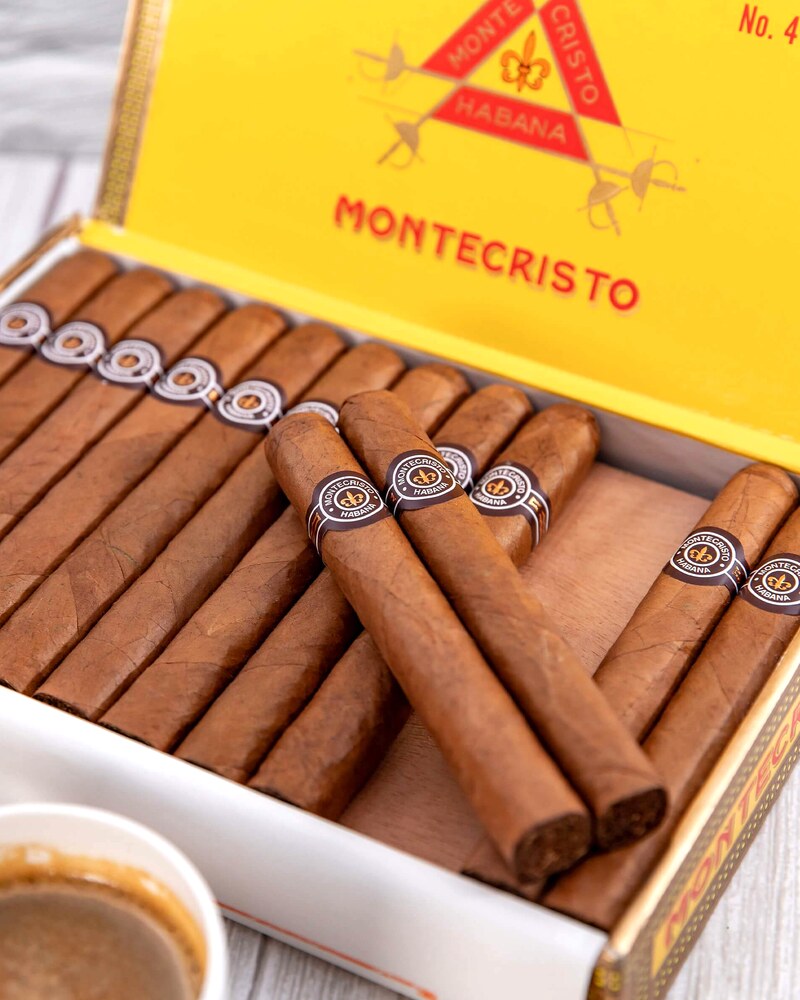
Montecristo No. 4: A Cuban Classic in Every Draw
There are cigars known for size and there are cigars known for presence. The Montecristo No. 4 belongs firmly in the latter. Measuring 5 inches with a 42 ring gauge, this robusto corto proves that proportion, when executed correctly, can deliver remarkable depth within a compact format.
It rests comfortably in the hand. It asks for little more than thirty to forty five minutes. Yet within that time, it offers a complete expression of classic Cuban character.
The cold draw reveals cocoa and cedar, supported by gentle earth and restrained sweetness. With careful lighting, the tobacco opens gradually, allowing the first true impressions to emerge with composure.
The Sensory Journey
First Third
The opening introduces cream and coffee in balanced measure. The smoke is smooth, layered with light wood and soft sweetness. There is no sharpness. Only steadiness.
At this stage, the Montecristo No. 4 demonstrates why it is often chosen as a reliable companion after a meal. It satisfies without overwhelming.
Second Third
As the cigar develops, cocoa and cedar deepen. Earth becomes more pronounced, accompanied by a restrained spice that adds dimension without dominating the palate. The texture gains subtle richness, coating the mouth with composed complexity.
This middle portion highlights the consistency that defines the Montecristo No. 4. Each draw remains measured and dependable.
Final Third
In the final third, roasted coffee and darker chocolate notes appear. A gentle pepper may surface on the retrohale, offering contrast to the sweetness. The body strengthens modestly while maintaining balance.
By the end, the cigar has delivered a full spectrum of flavor within a manageable duration. It closes with warmth rather than intensity.
Construction and Craft
The wrapper presents in an even caramel brown tone with a natural sheen. Properly stored, it remains supple and smooth. The burn line is typically straight when lit evenly, and the ash holds firm, reflecting disciplined rolling.
The draw offers slight resistance, guiding the smoke while allowing flavor to unfold steadily. For its size, it provides a surprisingly generous experience.
Montecristo No. 4 vs Partagas Serie D No. 4
Both are iconic Cuban petit coronas, but they appeal to different moods. The Partagas Serie D No. 4 opens with immediate boldness — dark earth, leather, and full-bodied spice that commands attention from the first draw. The Montecristo No. 4 takes a more measured approach, building through cream, cocoa, and cedar with gradual complexity.
If you enjoy a cigar that leads with power, the Serie D rewards that preference. If you prefer a cigar that unfolds with patience and subtlety, the Montecristo No. 4 is the natural choice. Many enthusiasts keep both in rotation.
Pairings and Ritual
The Montecristo No. 4 pairs well with beverages that complement its cocoa and coffee profile.
- Cognac to enhance sweetness and warmth
- Espresso to echo its roasted character
- Dark rum to bring forward subtle vanilla and molasses notes
A clean cut and gradual lighting ensure the cigar begins evenly. The ritual matters. Attention to detail preserves the balance intended in its construction.
The Legacy of Montecristo No. 4
It is often regarded as one of the most widely enjoyed Cuban cigars in the world. Its accessibility in strength and format makes it approachable, while its flavor depth ensures lasting appeal.
The Montecristo No. 4 represents what many seek in Cuban tobacco. Balance. Consistency. Tradition shaped by soil, climate, and practiced hands. It does not rely on scale or spectacle. It delivers satisfaction through proportion and discipline.
For seasoned enthusiasts and newcomers alike, it remains a reliable expression of Cuban craftsmanship, offering a measured and complete experience in every draw. If you are looking for a longer format with similar character, the Montecristo No. 2 offers an extended journey through the same distinguished blend.
Ready to Experience the Montecristo No. 4?
Authentic Cuban cigars, shipped worldwide with unbranded packaging.
I’m brand new to Cuban cigars and keep hearing the Montecristo No. 4 is the place to start. Is it really that good for beginners or is it overhyped?
It is genuinely one of the best entry points into Cuban cigars, Kevin — and that reputation is well earned. The medium body means it will not knock you back with nicotine or overwhelming pepper. The flavor profile is approachable yet interesting enough to show you what Cuban tobacco is all about. The shorter smoking time also works in your favor — around 30 to 40 minutes — so you are not committed to a marathon session while you are still finding your palate. We have seen many customers start with the No. 4 and build their preferences from there. It is a classic for a reason.
How long does a Montecristo No. 4 last? I want to get one for my husband but he usually only has about 30 minutes during his break.
Perfect choice, Patricia. The Montecristo No. 4 typically takes 30 to 45 minutes to smoke, depending on pace. At a relaxed but steady rhythm, your husband should be able to enjoy the full experience within his break window comfortably. It is one of the reasons this particular cigar is so popular — it delivers a complete, satisfying smoke without demanding an entire afternoon. A thoughtful gift, by the way.
What’s the best way to store Montecristo No. 4s if I buy a box of 25? I don’t have a big humidor.
You do not need anything fancy, Roberto. A quality travel humidor or even a Tupperware container with a Boveda 65% humidity pack will keep them in excellent condition. The key numbers to remember are 65 to 70 percent relative humidity and around 65 to 68 degrees Fahrenheit. Avoid direct sunlight and temperature swings. If you keep the box sealed with a Boveda pack inside, the cigars will actually continue to improve over the first six to twelve months. The Montecristo No. 4 ages beautifully — the flavors round out and the cocoa notes become even more pronounced.
I love the Montecristo No. 4 with coffee in the morning. Any other drink pairings you’d recommend for the evening?
Morning coffee with a No. 4 is a wonderful ritual, David. For evenings, we would strongly recommend a VS or VSOP cognac — something like Hennessy VS or Remy Martin VSOP. The brandy’s dried fruit and oak notes pair beautifully with the cigar’s cocoa and cedar. Aged dark rum is another excellent option — Diplomatico Reserva Exclusiva or Havana Club 7 Anejo both bring out vanilla and caramel notes that complement the Montecristo’s natural sweetness. If you prefer whiskey, a smooth bourbon like Woodford Reserve or a mellow Irish whiskey like Redbreast 12 would be our picks. The goal is something smooth enough not to compete with the cigar’s subtlety.