
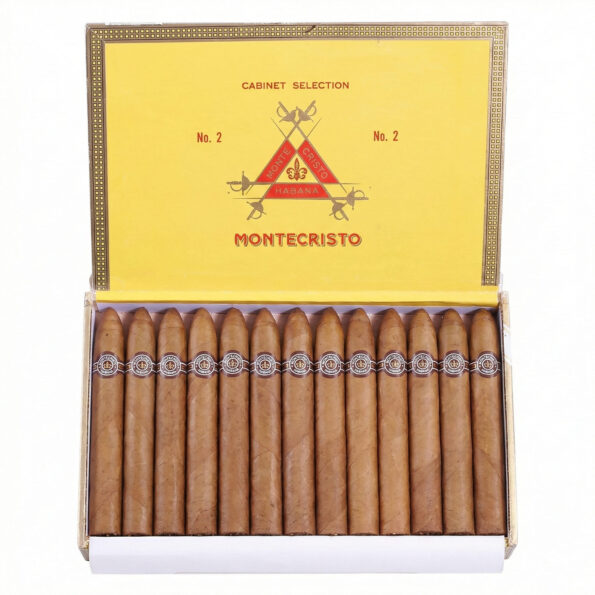
A Cigar That Sets the Pace
More reference than introduction
There are cigars you smoke without thinking, and others that ask something of you before the flame ever touches the foot. The Montecristo No. 2 has always belonged to the second group. Not because it is rare, and not because it needs defending, but because it carries history in a way that naturally slows the moment. The piramide shape does that on its own. It encourages patience. It reminds you that this cigar rewards attention rather than speed.
What the specifications cannot explain
On paper, the No. 2 reads like a textbook Cuban: a piramide measuring 156 millimeters with a 52 ring gauge, handmade and widely recognized. Pricing often sits around fifteen dollars per cigar, depending on source and availability. Those details matter, but they never tell the full story. With the Montecristo No. 2, they barely hint at it. The reputation surrounding this cigar is heavy, and that weight shapes expectation before the first draw.
When Construction Leads the Experience
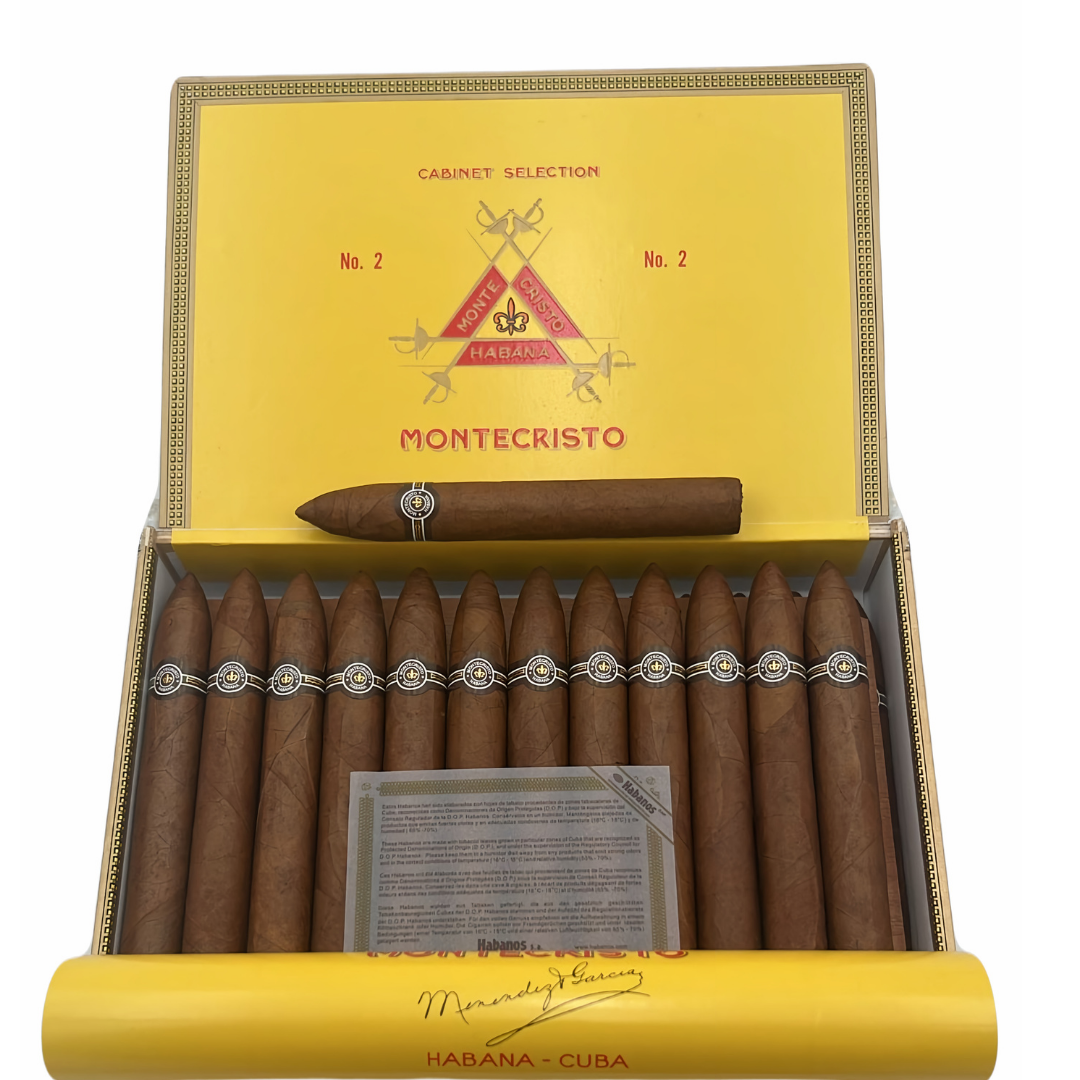
The draw as a deciding factor
A cigar’s reputation disappears quickly if the mechanics fail. Draw and combustion are not secondary details. They determine whether flavor has room to develop or remains locked away. A 2020 Montecristo No. 2 reportedly selected from a PSP program box arrived with visual promise, yet the draw was noticeably tight from the outset. Instead of opening easily, it resisted, restricting the smoke and muting early character.
Flavor trying to emerge
Even under resistance, the No. 2 still revealed its roots. The opening character leaned toward darker hay, musty rather than fresh, with a cellar like quality. A creamy nuttiness followed, often described as Brazil nut, and the description fits. Cocoa hovered in the background, present but not fully formed. These flavors were there, but they arrived quietly, as if waiting for the structure to allow them space.
How smokers usually respond
When a cigar struggles early, most smokers choose one of two paths:
- They set it aside and accept the loss
- They work with it until it opens
There is no shame in either choice. Still, many seasoned smokers understand that careful correction can change the entire experience. Adjusting airflow is not about forcing performance. It is about allowing the cigar to function as intended. When the draw finally opens, the Montecristo No. 2 often finds its footing.
The Journey Through the Thirds
The opening third
The first third is rarely dramatic. When expectation is high, this can feel underwhelming. Cedar appears softly, supported by light cream and restrained spice. On the retrohale, white pepper shows itself gently. Coffee notes are present but thin, lacking depth until the cigar settles. This phase asks for restraint from the smoker more than it offers immediate reward.
The middle third
The second third is where clarity arrives. Cedar becomes firmer and more structured. Nutmeg can appear, adding warmth without aggression. The retrohale carries a subtle floral sweetness that lingers briefly before fading. Balance defines this section. Creamy Brazil nut, brown sugar, mild milk chocolate, and a steadier coffee note begin to align. This is the point where the cigar starts to justify its standing.
The final third
As the cigar narrows, flavors concentrate. Cedar sharpens, mustiness becomes cleaner, and cocoa and coffee stretch into a longer finish. In stronger examples, leather enters quietly, adding texture rather than force. When everything cooperates, the final third feels composed and reflective, never loud, never rushed.
Why Expectations Matter

An honest assessment
It is possible for a Montecristo No. 2 to be respected and still fall short on a given night. That is not a contradiction. It is the reality of handmade cigars. Construction inconsistency is well documented, and when a cigar carries this level of reputation, any flaw feels amplified.
Who it suits best
The No. 2 can work for newer smokers, but only when approached with patience. It is not designed to impress immediately. It teaches pacing, attention, and tolerance for nuance. The ideal moment is an unhurried evening, free from distraction, where the cigar is allowed to unfold without pressure.
A Quiet Recommendation
Learning rather than judging
If a No. 2 leaves you unmoved, it does not mean your palate failed. It may simply mean the cigar was not ready, or that this particular example needed more time. Sometimes another vitola within the same family, such as the No. 5, delivers a similar profile with greater directness. That is not disloyalty. It is understanding.
The Montecristo No. 2 is not a promise. It is a tradition. When conditions align, it feels timeless. When they do not, it still reflects its origin, just in a quieter voice than the stories suggest.
You Might Also Enjoy
- Cohiba Siglo VI – Cohiba’s refined flagship with cream, cedar, and toasted nut character
- Partagas Serie D No. 4 – Cuba’s bold robusto with earth, leather, and dark chocolate depth
- Hoyo de Monterrey Epicure No. 2 – A masterclass in Cuban balance and restraint
Ready to experience the Montecristo No.2?
Shop authentic Cuban cigars with worldwide shipping and satisfaction guarantee.
How long should I age the Montecristo No. 2 before smoking? I just bought a box and they have a 2023 box code. Also what humidity level do you recommend for storage?
With a 2023 box code, your Montecristo No. 2 cigars have already had about two years of aging, which is a solid starting point. Many aficionados find the sweet spot between 3-5 years total age, where the sharpness mellows and the cocoa, cream, and cedar notes fully integrate. You can smoke one now to establish a baseline and then revisit every 6 months to track the development. For storage, maintain 62-65% relative humidity and 65-68°F temperature. Boveda 65% packs are excellent for consistency. Avoid going above 70% humidity as it can cause burn issues and potentially mold. The Montecristo No. 2 is one of the Cuban cigars that benefits most from patient aging.
What is the best drink pairing for the Montecristo No. 2? I usually drink scotch with my cigars but I feel like it overpowers some Cuban cigars. Any suggestions for a better match?
The Montecristo No. 2 pairs exceptionally well with aged rum, particularly Santiago de Cuba 12 or Diplomático Reserva Exclusiva. The caramel and vanilla in aged rum complement the cigar’s nutty, cocoa-driven profile without overwhelming it the way peated scotch can. If you prefer whiskey, try a bourbon like Woodford Reserve or a Japanese whisky like Hibiki Harmony. For non-alcoholic options, a medium-roast Colombian coffee or an oolong tea brings out the No. 2’s subtle sweetness. The key is avoiding anything too smoky or tannic that competes with the cigar’s natural complexity.
How does the Montecristo No. 2 compare to the Montecristo No. 4? I have been smoking the No. 4 for years and wonder if the No. 2 is worth the price difference. Also curious about the piramide shape, does it really change the flavor?
Great question Daniel. The Montecristo No. 2 and No. 4 share the same Vuelta Abajo blend, but the piramide shape of the No. 2 concentrates the smoke differently through the tapered head, delivering more complexity and a gradual build that the Petit Corona format of the No. 4 does not quite achieve. The No. 4 tends to be more direct and immediate in its flavors, while the No. 2 rewards patience with evolving layers of cedar, cocoa, and cream. The price difference reflects both the larger format and the additional skill required to roll a piramide. If you enjoy the Montecristo profile, the No. 2 is absolutely worth trying, especially with 2-3 years of aging.
How long should I age a box of Montecristo No. 2 before smoking them? I just bought a box of 25 and I have heard that aging Cuban cigars makes a big difference. What humidity and temperature should I store them at?
The Montecristo No. 2 responds beautifully to aging and is one of the Cuban cigars that benefit most from patience. For a fresh box, try one right away to establish your baseline, then set the rest aside. After 2 to 3 years the youthful sharpness mellows and the cedar and cocoa notes deepen significantly. At the 5-year mark you will notice a creamy smoothness that transforms the entire smoking experience. Some aficionados age their No. 2s for 8 to 10 years with outstanding results. Store your box at 65 to 68 percent relative humidity and between 65 to 70 degrees Fahrenheit. Avoid temperature fluctuations as they cause the wrapper to expand and contract which can lead to cracking. A quality humidor with Spanish cedar lining is ideal. The piramide shape of the No. 2 ages particularly well because the extra tobacco at the foot develops richer complexity over time compared to parejos.