

No, you do not inhale a cigar. You draw the smoke into your mouth, hold it there for a second or two to taste it, then let it out. A cigar is meant to be savored on the palate, not pulled into your lungs the way a cigarette is. This is the single most important thing a new smoker can learn, because inhaling a fine Cuban will make you cough, turn a little green, and probably swear off cigars before you’ve understood why people have enjoyed them for centuries.
Below is the honest, practical version: how to actually smoke a cigar, what really separates a cigar from a cigarette, what that famous “buzz” is, and how to make your first one a pleasure instead of a mistake.
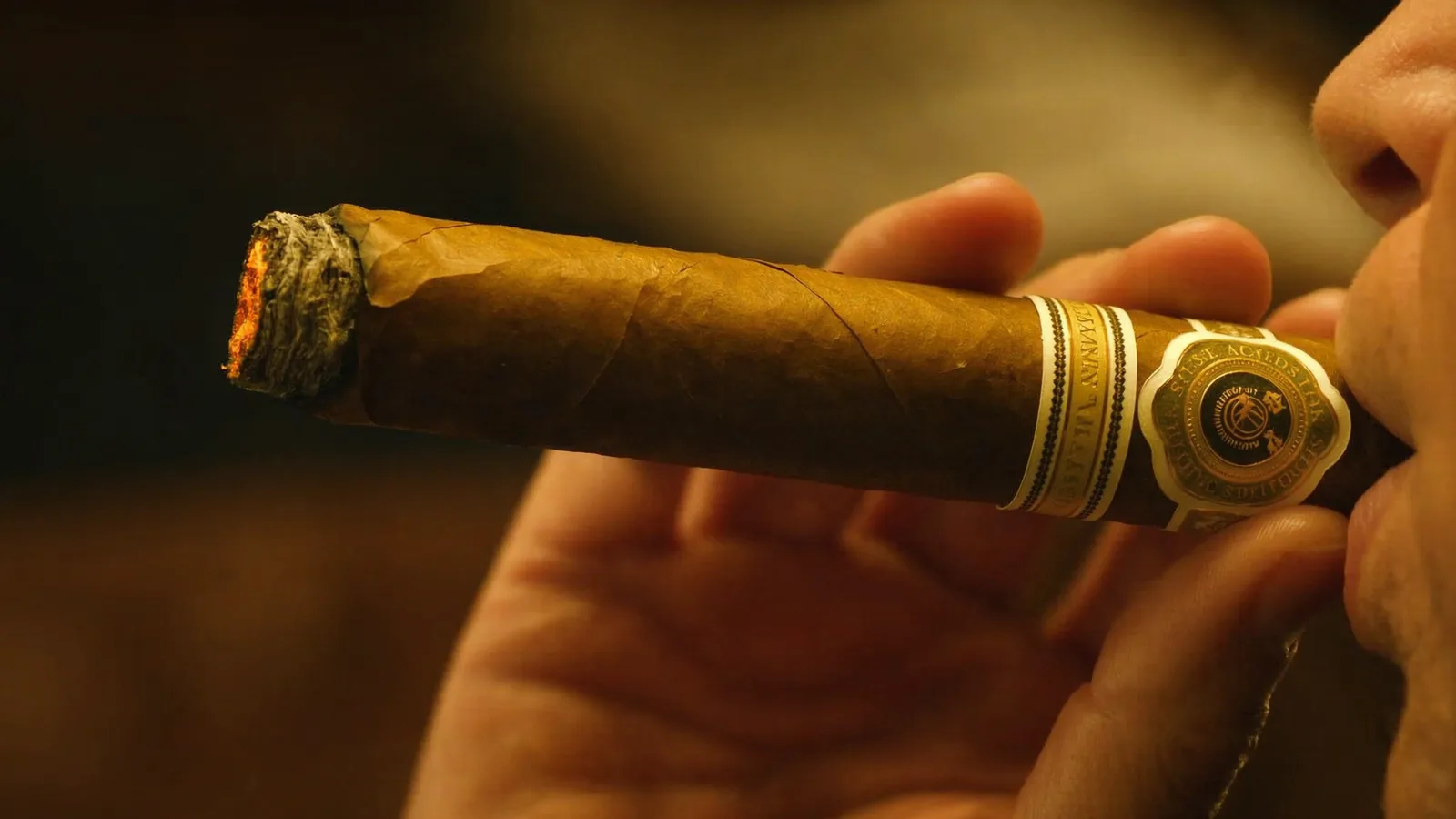
Are you supposed to inhale cigars?
You are not. With a cigarette, you pull smoke deep into your lungs because that is the only way the nicotine reaches your bloodstream quickly. A cigar works on a completely different principle. Cigar tobacco is air-cured, which makes its smoke alkaline, and alkaline nicotine is absorbed directly through the soft tissue lining your mouth. You get everything the cigar has to offer without your lungs ever being involved.
So inhaling is not just unnecessary, it actively ruins the experience. Cigar smoke is thick, oily, and far more concentrated than cigarette smoke. Pull it into your lungs and your body responds the only way it knows how: a hard cough, a burning chest, and a quick path to feeling sick. As the editors at Cigar Aficionado put it, your tastebuds are in your mouth, not your lungs.
How to actually smoke a cigar
Smoking a cigar is a slow, deliberate ritual, closer to sipping a good whisky than to a cigarette break. Here is the technique, step by step.
- Cut cleanly. Take about a sixteenth of an inch off the closed cap end with a sharp cutter. Cut too deep and the wrapper starts to unravel.
- Toast and light. Hold the foot just above the flame without touching it, rotating the cigar until the edge glows evenly. Use a soft butane flame or a wooden match, never a candle or a stove burner.
- Draw into your mouth. Take a slow, gentle puff, as if sipping through a thick straw, and let the smoke pool in your mouth. Stop there. Do not breathe in.
- Taste it. Hold the smoke for a moment and notice the flavors, the cedar, leather, cocoa, coffee or pepper, then let it roll back out past your lips.
- Pace yourself. Puff roughly once a minute. Smoke too fast and the cigar overheats and turns bitter, so let it rest between draws.
- Leave the ash alone. Let an inch or so of ash build before you tap it off. That ash actually helps cool the smoke.
Once you are comfortable, you can try retrohaling, which means gently pushing a little smoke out through your nose as you exhale. This is not inhaling into your lungs. It passes the smoke over the scent receptors in your nose, where most of the nuance lives. It can be intense the first time, so start with the smallest amount. For more on cutting, lighting and smoking, Cigar Aficionado’s Cigar 101 is a solid reference.
Cigars vs cigarettes: what is actually different
They both involve tobacco and smoke, but a cigar and a cigarette are nearly opposites in how they are made, used, and enjoyed. That is exactly why the “do I inhale?” answer flips between them.
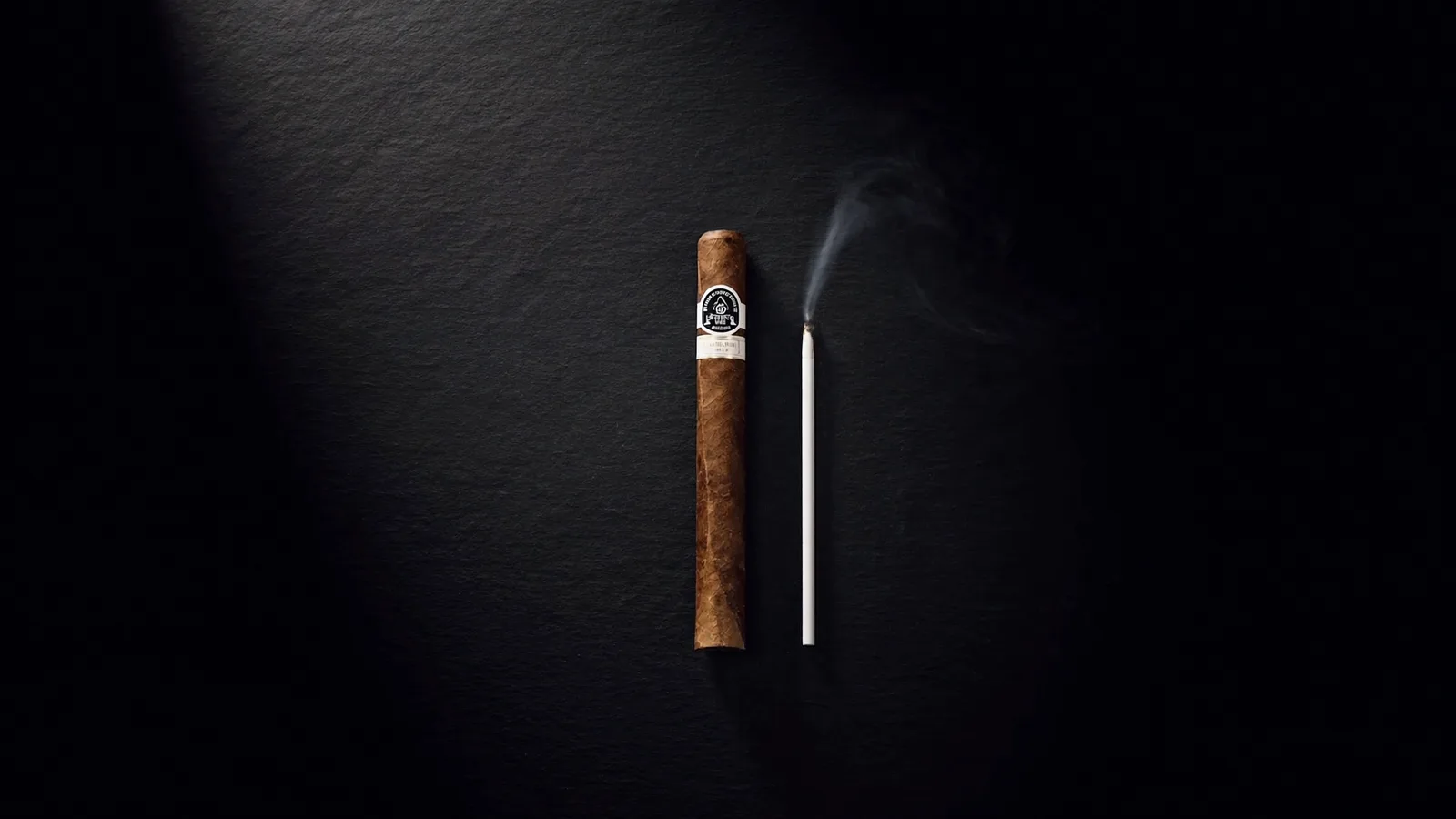
| Cigar | Cigarette | |
|---|---|---|
| Tobacco | Whole air-cured leaves, aged and fermented | Finely chopped, flue-cured tobacco |
| Wrapper | A natural tobacco leaf | Paper, often with additives |
| Smoke pH | Alkaline, absorbed in the mouth | Acidic, absorbed in the lungs |
| Inhaled? | No, tasted on the palate | Yes, drawn into the lungs |
| Time to smoke | 30 minutes to two hours or more | About five minutes |
| Typical use | An occasional ritual | A daily, habitual cadence |
| The point | Flavor, craft, the moment | Fast nicotine delivery |
This is also why a cigar is treated as a treat rather than a habit. Nobody chain-smokes a Cohiba on a coffee break. You set aside an hour, pour something to drink, and let it unfold, which is really the whole appeal.
Do cigars get you high or give you a buzz?
Cigars will not get you “high,” since there is no cannabis involved, just tobacco. They can absolutely give you a nicotine buzz, though. Because you absorb the nicotine through your mouth, a stronger cigar produces a gentle, warm, slightly light-headed feeling that experienced smokers genuinely enjoy. It is part of why a full-bodied cigar after a good dinner feels so satisfying.
That buzz tips over into nausea quickly if you overdo it. Two simple rules keep it pleasant: never smoke on an empty stomach, and do not pick a powerhouse cigar as your very first. Eat something first, start with a mild to medium smoke, and keep water or a sweet drink within reach. If you start to feel queasy, set the cigar down and the feeling passes within a few minutes. Cigar Aficionado has a useful guide on avoiding that strong-cigar dizziness.
If you are brand new to all of this, a milder, well-mannered smoke is the move. We put together a guide to the best Cuban cigars for beginners for exactly that reason.
What happens if you accidentally inhale a cigar?
You will know instantly. Inhaling concentrated cigar smoke triggers a hard cough, a burning feeling in the chest and throat, watering eyes, and often a fast wave of dizziness from the nicotine. It is unpleasant but not dangerous as a one-off. Sip some water, get a little air, and go back to keeping the smoke in your mouth. Nearly every cigar smoker has done it at least once. Think of it as a rite of passage rather than a disaster.
So what is the appeal of cigars?
If you are not inhaling, and it is not about a quick nicotine fix, why do people love cigars so much? In a word, ritual. A good cigar slows you down. It marks the big moments, the weddings, the births, the closed deals, and it doubles as an everyday luxury that asks you to sit still for an hour and actually taste something. The flavors of a well-aged Cuban shift from the first third to the last, the way a good wine opens up in the glass.
All of that rests on craftsmanship: aged, fermented, hand-rolled tobacco, often grown in a single region. If you want to understand the flavors you are tasting, our guides to cigar sizes and vitolas and cigar and drink pairings are the natural next step. For the history and culture behind the leaf, the official Habanos S.A. site and the reference catalog at Cuban Cigar Website are both worth a long afternoon.
A responsible note: cigars are for adults 21 and over. No tobacco product is safe, and a cigar is not a “healthy” alternative to a cigarette. Even without inhaling, cigar use carries real health risks. Enjoy occasionally, in moderation, and never while pregnant or around people who have not chosen to be around smoke.
Frequently asked questions
Do you inhale a cigar?
No. You draw cigar smoke into your mouth, hold it briefly to taste it, then exhale. The smoke never goes into your lungs, which is the core difference between savoring a cigar and smoking a cigarette.
Are you supposed to inhale cigars?
You are not. Cigar smoke is alkaline, so the nicotine absorbs through the lining of your mouth without any need to inhale. Pulling it into your lungs only makes you cough.
Do cigars get you high or give you a buzz?
They do not get you high, but they can give a mild nicotine buzz, a relaxed and slightly light-headed feeling that is stronger with full-bodied cigars or on an empty stomach. It fades within a few minutes.
What is the difference between a cigar and a cigarette?
A cigar is whole, aged tobacco wrapped in a tobacco leaf, tasted in the mouth and smoked slowly over an hour or more. A cigarette is chopped tobacco wrapped in paper, inhaled into the lungs and finished in minutes.
What happens if I inhale cigar smoke?
You will cough hard, feel burning in your chest, and probably get dizzy or queasy from the concentrated nicotine. Sip water, take a breath, and keep the next puff in your mouth only.
Is a cigar safer than a cigarette?
No tobacco product is safe. Cigars are used differently, not inhaled and smoked occasionally rather than daily, but they still carry real health risks and are strictly for adults 21 and over.
Browse our hand-selected, authentic Cuban cigars and start your first one mild, slow, and savored.