
Cuban Cigar Sizes, Colors & Shapes
Few objects carry as much quiet ceremony as a well-made Cuban cigar. Before the first match is ever struck, a Habano tells its story through three things you can read with your own eyes — its size, its shape, and the colour of its wrapper. Learn to read those three, and you no longer buy cigars blindly; you choose them the way a seasoned aficionado does. This guide walks you through the language of Cuban cigars the way it has been spoken in the galeras of Havana for more than a century.
The Anatomy of a Habano
Every Cuban cigar is hand-rolled from three families of leaf — the filler (the heart), the binder (the leaf that holds the bunch together), and the wrapper, or capa, the flawless outer leaf that gives a cigar its colour and a good measure of its flavour. The rounded end you cut and draw from is the head; the open end you light is the foot; the small disc of leaf sealing the head is the cap.
Two simple measurements describe a cigar’s proportions, and they appear on every box and price list you will ever read:
Length is measured in inches — from a stubby 4″ Petit Corona to a stately 7″ Churchill.
Ring gauge is the diameter, measured in 64ths of an inch. A ring gauge of 42 means the cigar is 42/64″ thick. The higher the number, the fatter the cigar — and, as a rule, the cooler and slower the smoke.
A cigar with the same ring gauge along its whole body, capped neatly at the head, is called a parejo — the classic straight-sided cigar. Anything that tapers, bulges or comes to a point is a figurado. Those two words divide the entire world of cigar shapes, and we will come back to them.
Cuban Cigar Sizes: Understanding the Vitolas
In Cuba, a cigar’s size-and-shape is called its vitola. There are two layers to the word. The vitola de galera is the factory name — the size as the rollers know it (a “Laguito No. 1,” for instance). The vitola de salida is the commercial name you see on the band (a “Lancero”). One factory shape can wear many different commercial names across the brands, which is why a Cohiba and a Montecristo of the same dimensions can feel like distant cousins.
The table below gathers the classic Habano sizes you will meet most often, with their typical dimensions and the unhurried smoking time each one asks of you. Treat the minutes as a guide, not a stopwatch — a good cigar is never rushed.
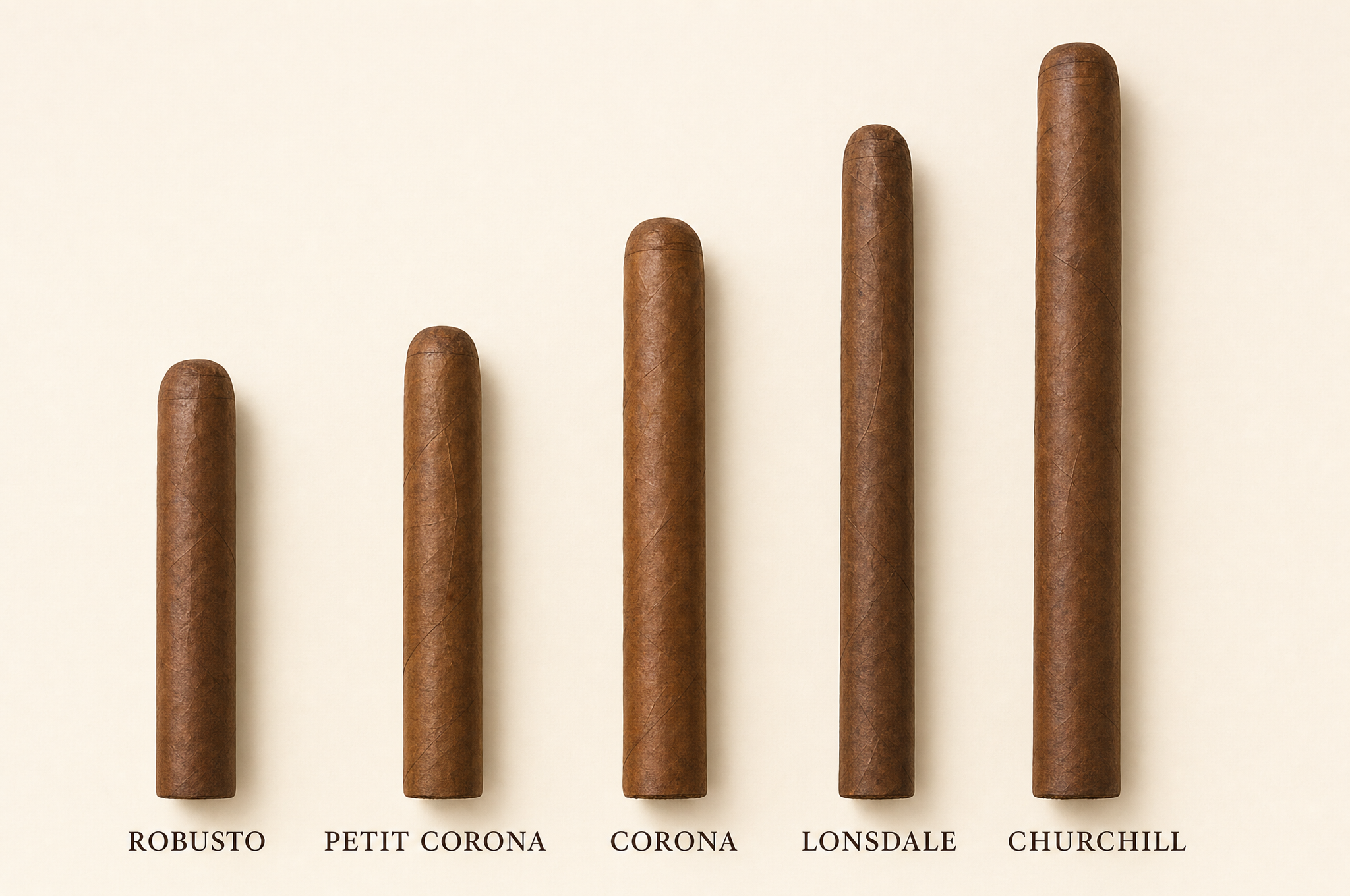
| Vitola (commercial) | Length | Ring Gauge | Smoking Time | Character |
|---|---|---|---|---|
| Petit Corona | 5.1″ (129 mm) | 42 | 30–45 min | A quick, classic everyday smoke |
| Corona | 5.6″ (142 mm) | 42 | 45–60 min | The benchmark against which others are judged |
| Robusto | 4.9″ (124 mm) | 50 | 45–60 min | Short but full-bodied; the modern favourite |
| Corona Gorda | 5.6″ (143 mm) | 46 | 60–75 min | Rich and balanced, with room to develop |
| Lonsdale | 6.5″ (165 mm) | 42 | 60–75 min | Elegant and slender, an aficionado’s classic |
| Toro / Hermoso No. 4 | 5.6″ (143 mm) | 48–52 | 60–75 min | Generous and cool-burning |
| Churchill | 7.0″ (178 mm) | 47 | 75–90 min | The grand evening cigar, named for Sir Winston |
| Double Corona | 7.6″ (194 mm) | 49 | 90–120 min | A connoisseur’s marathon of flavour |
| Lancero | 7.5″ (192 mm) | 38 | 75–90 min | Long and fine; prized for its wrapper-forward taste |
| Panetela | 4.5–6.0″ | 26–34 | 30–45 min | Slim and refined, gentler in strength |
As a simple rule of thumb: a thicker ring gauge gives a cooler, rounder, more leisurely smoke, while a slimmer cigar lets the wrapper’s flavour sing and burns a touch warmer. For a deeper look at every dimension, see our dedicated Cuban cigar size guide.
Cuban Cigar Shapes: Parejos & Figurados
If size tells you how long you will spend with a cigar, shape tells you how it will smoke. The two great families — the straight parejos and the sculpted figurados — have been rolled in Havana since the nineteenth century.
Parejos — the straight-sided classics
These are the cigars most people picture: cylindrical, even, with a rounded head to cut and an open foot to light. The Corona, Robusto, Lonsdale, Churchill and Double Corona are all parejos. They are forgiving to cut, easy to light, and burn with a steady, predictable rhythm — which is exactly why they remain the heart of every great Cuban marque, from Cohiba to Montecristo.
Figurados — the shaped showpieces
Figurados are the rollers’ art at its most ambitious. Because their diameter changes along the length, the smoke concentrates and opens as you go, giving a more dramatic, evolving experience. The most celebrated shapes include:
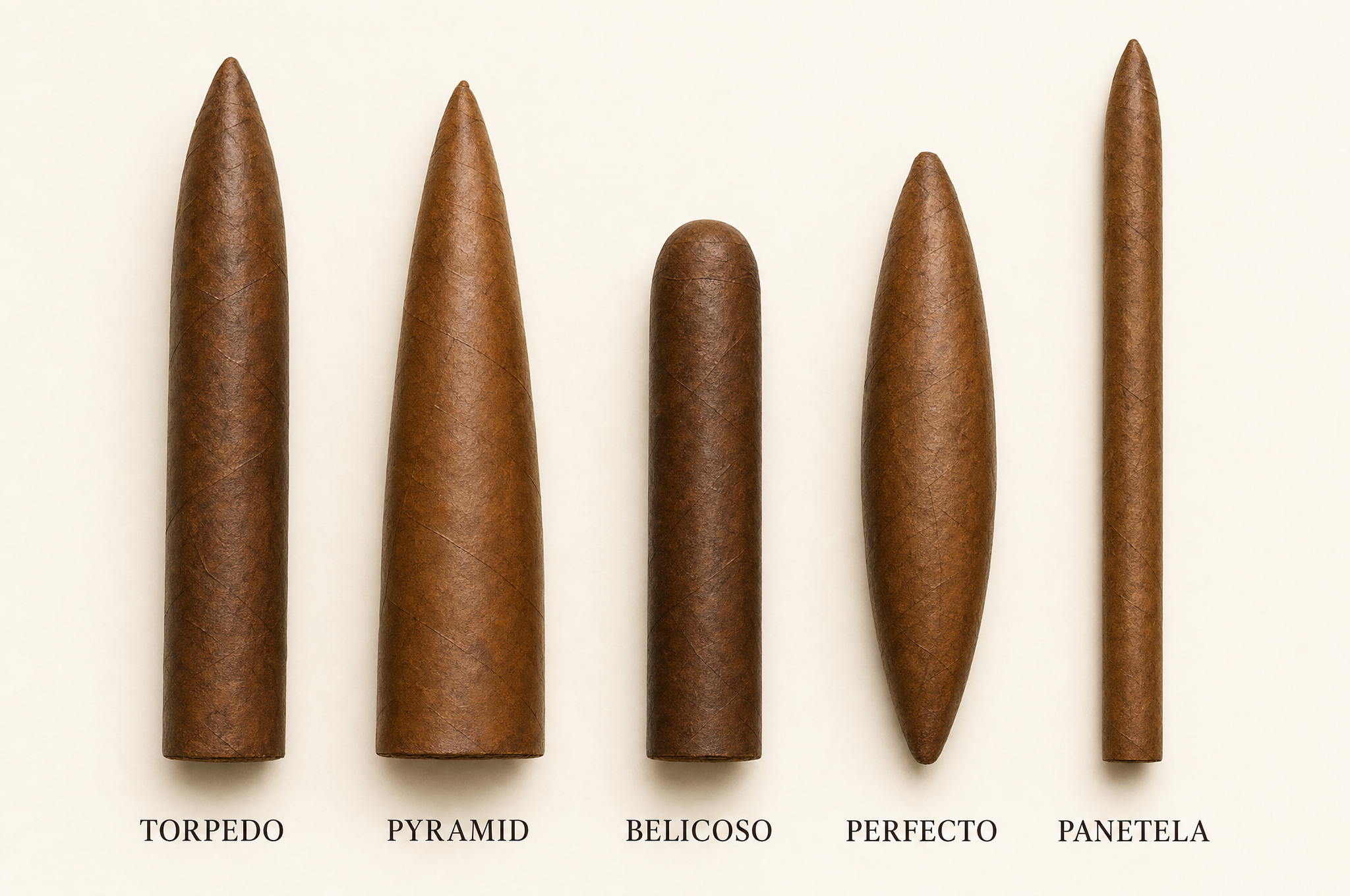
- Pirámide — a broad foot tapering to a pointed, sealed head; the taper funnels flavour and aroma toward the palate. Montecristo’s No. 2 is the most famous example.
- Torpedo — close cousin to the Pirámide, with a more tightly pointed head and fuller body.
- Belicoso — shorter and stouter, with a gently rounded, tapered head; quick yet concentrated.
- Perfecto — tapered at both ends and bulging in the middle, the silhouette of an old-world cigar.
- Diadema — a giant, ceremonial perfecto, often seven inches or more; a true occasion cigar.
- Culebra — three panetelas braided together and tied, a curiosity born from the rollers’ daily ration.
New to all this? A medium Robusto or Corona in a parejo shape is the friendliest place to begin — see our guide to the best Cuban cigars for beginners.
Reading the Wrapper: Cuban Cigar Colours
The capa, or wrapper, is the first thing your eye meets and the last leaf to be applied — chosen for its silken texture, fine veins and even colour. That colour is no accident: it comes from the leaf’s position on the tobacco plant, the length of its fermentation, and how long it has aged. As a general rule, a darker wrapper means a sweeter, richer, more full-bodied smoke, while a lighter wrapper tends to be drier, crisper and more delicate. The traditional Cuban colour scale runs roughly as follows:
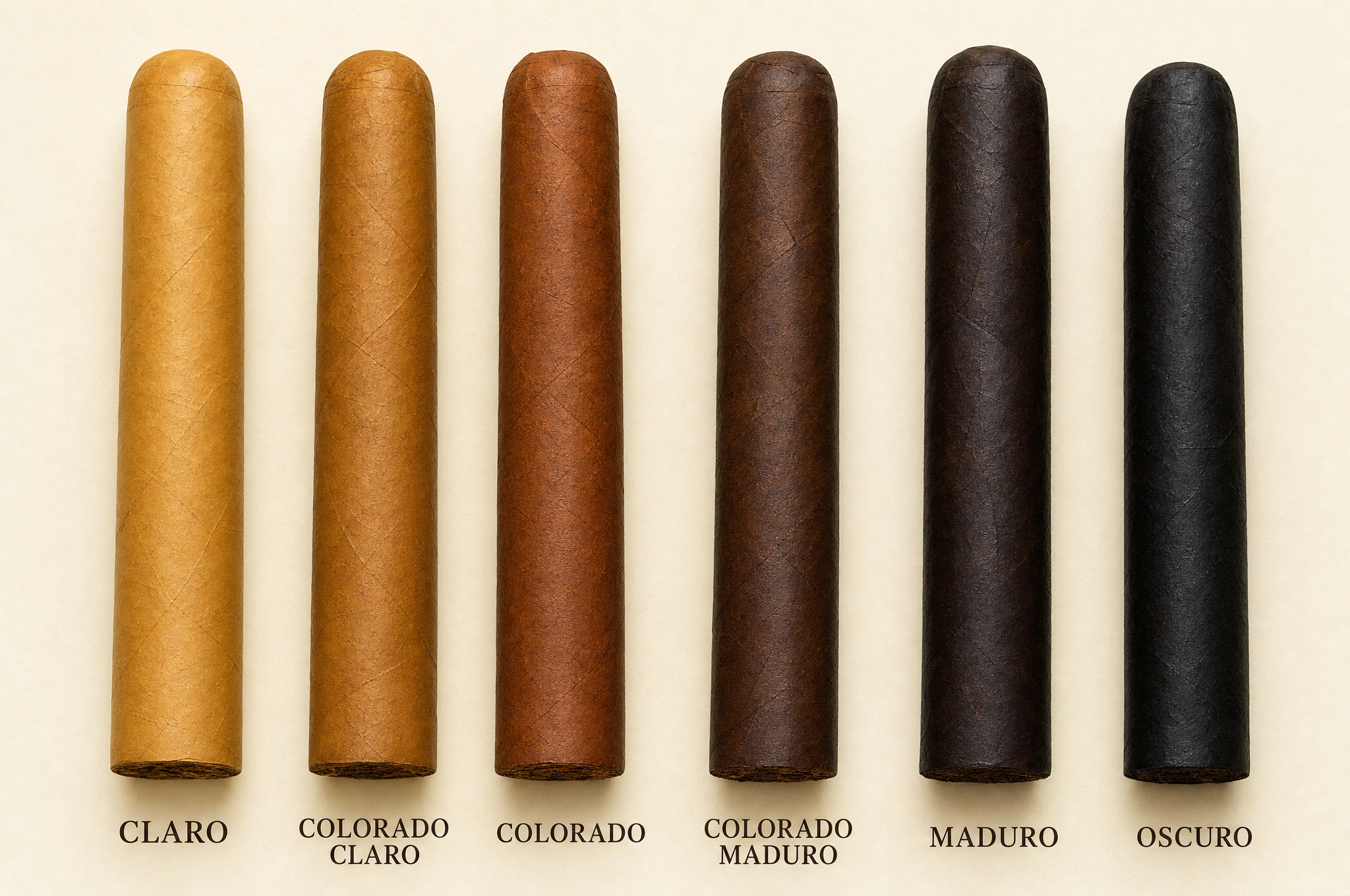
| Wrapper Colour | Appearance | Flavour Tendency |
|---|---|---|
| Claro | Pale, light tan — grown under shade | Mild, smooth, subtly grassy |
| Colorado Claro | Warm golden-brown | Balanced and aromatic, lightly sweet |
| Colorado | Rich reddish-brown | Full, aromatic, with cocoa and spice |
| Colorado Maduro | Deep brown with a ruddy cast | Robust and rounded, notes of coffee |
| Maduro | Dark, near-chocolate, oily sheen | Sweet, full-bodied — espresso and dark cocoa |
| Oscuro | Almost black; the longest-fermented leaf | Intense, earthy, deeply sweet |
A word of caution: a darker wrapper is not a sign of greater strength in the filler — strength lives inside the cigar, in the blend, while the wrapper governs sweetness and aroma. To explore each shade in detail, read our companion piece on cigar wrapper types.
Choosing by Time & Occasion
Once you can read size, shape and colour together, choosing the right cigar becomes effortless. A few honest pairings from years behind the humidor:
- A short break (30–45 min): a Petit Corona or a Robusto — full character, no rush.
- An after-dinner hour: a Corona Gorda or Toro, with the body to carry a glass of aged rum.
- A long, unhurried evening: a Churchill or Double Corona — the cigar that earns the word celebration.
- A wrapper-led tasting: a slender Lancero or Lonsdale, where the capa does the talking.
And when the moment calls for it, the right drink turns a fine cigar into a memory — our guide to cigar and drink pairings shows you how to match Habanos with rum, whisky and coffee.
Buy with Confidence
Knowing your vitolas and wrapper shades is also your best protection against counterfeits. Genuine Habanos are consistent in construction, colour and banding — learn the tell-tale signs in our guide on how to spot fake Cuban cigars. When you are ready to choose, every cigar we sell is a guaranteed-authentic Habano, shipped worldwide from our humidor to yours. Browse the great Cuban marques — Cohiba, Montecristo, Partagás, Romeo y Julieta, Hoyo de Monterrey and Trinidad — or explore the full collection of Cuban cigars for sale.